
Low Voltage Insulators

Electrical Panel Accessories
Low Voltage Insulators

Electrical Panel Accessories: DMC Busbar Supports for Safety

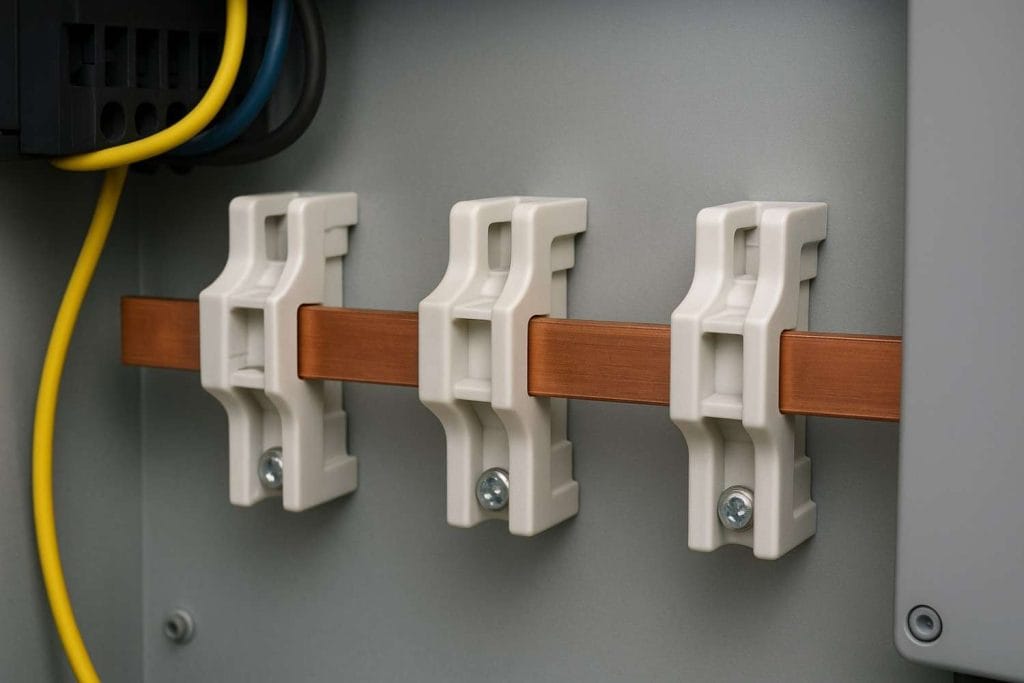
Electrical Panel Accessories: DMC Busbar Supports for Safety Electrical Panel Accessories are the backbone of safe and efficient power distribution. From factories and industries to commercial buildings and homes, these accessories ensure smooth electricity flow and reliable system operation. Among the wide range of components available, DMC busbar supports stand out as one of the most essential electrical panel accessories for safety, durability, and performance. What Are DMC Busbar Supports? A busbar support is a device that holds and insulates busbars inside an electrical panel. Busbars are metallic strips (usually copper or aluminum) that carry large electrical currents. Without strong support, these conductors may bend, vibrate, or touch each other, leading to dangerous short circuits. This is where electrical panel accessories like DMC busbar supports step in. DMC (Dough Molding Compound) is a fiberglass-reinforced thermoset polyester resin that offers: High electrical insulation Mechanical strength Heat resistance Long-lasting performance Thanks to these properties, DMC busbar supports are trusted worldwide by panel builders, OEMs, and electrical contractors. Why Safety Depends on Electrical Panel Accessories When we think of electrical safety, circuit breakers and fuses usually come to mind. However, the stability of busbars inside the panel is just as important. If busbars are not securely supported, the risks include: Short Circuits – Loose conductors can touch each other or the panel body. Overheating – Poor insulation leads to excess heat and possible fire hazards. Arc Flash – Reduced clearance distances may cause dangerous flashovers. Maintenance Risks – Unstable panels increase hazards for technicians. With the right electrical panel accessories such as DMC busbar supports, panels maintain mechanical stability, safe insulation distances, and long-term reliability. Benefits of DMC Busbar Supports in Electrical Panels Choosing the right electrical panel accessories makes all the difference in terms of safety, reliability, and cost savings. Here’s why DMC busbar supports stand out: 1. Superior Electrical Insulation DMC is an excellent insulating material, preventing current leakage and reducing the risk of electrical failures 2. High Mechanical Strength These supports hold heavy copper and aluminum busbars without bending or breaking, even under short-circuit conditions. 3. Thermal Resistance Panels often face high operating temperatures. DMC busbar supports resist heat, ensuring stability even during overload conditions. 4. Longevity & Durability Unlike low-grade plastic supports, DMC components do not degrade easily under electrical stress, providing long-lasting performance. 5. Compliance with Safety Standards Most quality DMC busbar supports are tested and certified to meet international electrical safety norms, giving panel builders and end-users peace of mind. Applications of DMC Busbar Supports DMC busbar supports are widely used in various electrical setups, including Low-voltage distribution boards Control panels for industrial machinery Power factor correction panels Motor control centers (MCCs) Switchboards for commercial and residential projects Renewable energy systems like solar inverters Wherever electrical panels are installed, busbar supports are essential for ensuring safe power distribution. Electrical Panel Accessories Beyond Busbar Supports While busbar supports are crucial, a complete panel requires many electrical panel accessories, including: Neutral links and earth bars Spacers and insulators Polycarbonate enclosures Ferrules and cable terminals Together, these accessories enhance panel performance, safety, and longevity. Why Choose DMC Over Other Materials? Some panel builders still use supports made from Bakelite or general-purpose plastics. While these materials may be cheaper, they fall short in terms of safety and performance. Bakelite can crack under stress or absorb moisture over time. Ordinary plastics may soften under heat, causing busbars to loosen. In contrast, DMC offers the perfect balance of strength, insulation, and thermal resistance, making it the best choice for modern electrical panels. In contrast, DMC offers the perfect balance of strength, insulation, and thermal resistance, making it the best choice for modern electrical panels. How the Right Electrical Panel Accessories Boost Productivity High-quality accessories don’t just protect — they also improve workflow: Easy Installation – Saves time during panel assembly. Low Maintenance – Long-lasting durability reduces repair costs. Customer Confidence – Panels built with premium electrical panel accessories enhance trust and reputation. In contrast, DMC offers the perfect balance of strength, insulation, and thermal resistance, making it the best choice for modern electrical panels. Conclusion When it comes to electrical panel accessories, every component matters. but none more than busbar supports. DMC busbar supports may seem small, yet they provide unmatched safety, strength, and insulation inside panels. For panel builders, OEMs, and contractors, choosing DMC busbar supports means fewer risks, greater reliability, and long-term customer satisfaction. In short, quality electrical panel accessories aren’t just add-ons — they’re the foundation of safe, efficient, and trustworthy power systems Your panels deserve the best. Let’s discuss how our DMC insulators can fit your requirements +971 529154774 info@almayarmj.com    
LV Insulators
Low Voltage Insulators

LV Insulators : Detailed Guide for Safe Power Systems

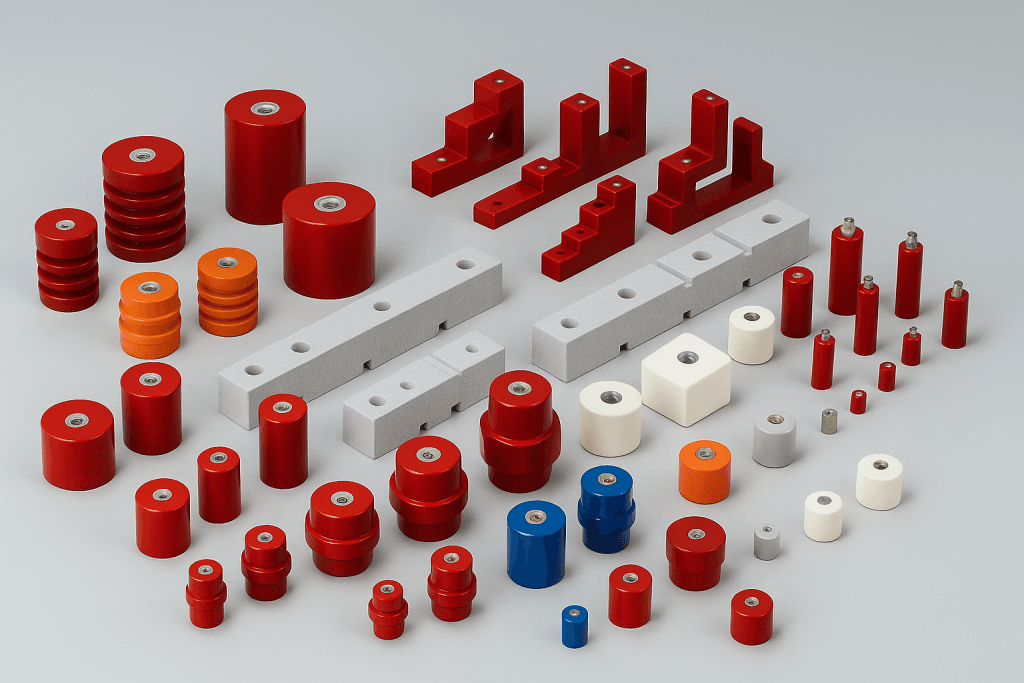
LV Insulators : Detailed Guide for Safe Power Systems LV Insulators are essential components in modern electrical systems, especially in power distribution networks and low voltage switchgear assemblies. These insulators are critical for maintaining electrical safety, system efficiency, and equipment longevity. In this comprehensive guide, we will explore what LV Insulators are, their types, materials, key benefits, applications, and how to choose the right insulator for your power systems. What Are Low Voltage Insulators? LV Insulators (Low Voltage Insulators) are insulating components used in electrical systems to prevent unintended contact between conductive parts and to provide electrical isolation within low voltage applications, typically up to 1,000 volts. They act as physical barriers that support and separate live electrical parts from grounded structures, ensuring system safety and performance. Why Are Low Volatge Insulators Important? Low Voltage Insulators play a crucial role in: Preventing Electrical Failures: They stop current leakage and prevent short circuits. Ensuring Personal Safety: Insulators protect technicians and end-users from electric shocks. Improving Equipment Reliability: By minimizing electrical faults, they help extend equipment life. Reducing Downtime: Reliable insulators help maintain uninterrupted power flow. Types of Low Voltage Insulators ? There are various types of LV Insulators depending on their shape, design, and application: 1. Busbar Support Insulators Used to support and insulate busbars in low voltage panels. 2. Post Insulators Designed for vertical mounting to provide support and electrical isolation. 3. Spindle Insulators Compact insulators used in tight spaces within control panels. 4. Custom Composite Insulators Tailored to specific projects requiring unique shapes, materials, or performance levels. Common Materials Used in Insulators The performance of an Low Voltage Insulator depends heavily on the material used. Common materials include: DMC (Dough Moulding Compound): Known for its mechanical strength and electrical insulation properties. SMC (Sheet Moulding Compound): Offers high resistance to heat and electrical conductivity. Polyamide (Nylon): Lightweight, chemical-resistant, and widely used in modern panels. Epoxy Resin: Provides excellent mechanical strength and dielectric performance. Applications of Low Voltage Insulators Low Voltage Insulators are widely used in: Low Voltage Switchgear Panels Busbar Systems Control Cabinets Distribution Boards Renewable Energy Systems Electrical Machines and Motors Benefits of Using Quality LV Insulators High Electrical Insulation Excellent Mechanical Strength Temperature and Fire Resistance Long-Lasting Performance Customization for Specific Needs Easy Installation and Maintenance How to Select the Right LV Insulator Voltage Rating: Ensure compatibility with your system voltage. Mechanical Load: Select insulators that can handle the required mechanical stress. Environmental Conditions: Consider temperature, humidity, and chemical exposure. Material Type: Choose materials that suit your specific electrical and mechanical needs. Customization: For special applications, look for manufacturers offering custom composite solutions. Common Failures and How to Prevent Them Some issues that arise from poor-quality or misapplied LV Insulators include: Electrical tracking Mechanical breakage Surface contamination Thermal degradation Prevention Tips: Always source from reliable manufacturers. Ensure proper installation and alignment. Schedule regular inspections and maintenance. Avoid overloading insulators beyond their mechanical limits. Conclusion LV Insulators are the backbone of safe and reliable low voltage power systems. Choosing the right type and quality of insulator not only ensures operational safety but also enhances system performance and durability. As trusted manufacturers of LV Insulators, we understand the importance of precision, quality, and reliability in every product we deliver. For expert guidance or custom solutions, contact us today and let’s build safer power systems together. LV Insulators  

FRP Epoxy and SMC Insulators
Low Voltage Insulators

FRP Epoxy & SMC Insulators: The Backbone of Modern Switchgear

FRP Epoxy and SMC Insulators Backbone of Modern Switchgear FRP Epoxy and SMC Insulators insulators are specialized materials used to electrically isolate different conductive parts within switchgear assemblies, preventing unwanted current flow and electrical faults. Each of these materials brings unique properties that make them indispensable in high-performance electrical equipment. FRP Epoxy and SMC Insulators In the world of electrical power distribution and automation, the role of insulators is critical to ensure operational safety, system reliability, and long-term durability. Among the latest innovations in insulation technology, FRP (Fiber Reinforced Plastic), Epoxy, and SMC (Sheet Molding Compound) insulators stand out as essential components in modern switchgear systems.These high-performance insulating materials are transforming the way electrical switchgear is designed and built—offering unmatched strength, excellent dielectric properties, and superior resistance to extreme environments. These high-performance insulating materials are transforming the way electrical switchgear is designed and built—offering unmatched strength, excellent dielectric properties, and superior resistance to extreme environments. Understanding the Modern Need FRP Epoxy and SMC Insulators Switchgear systems are at the heart of every electrical distribution network, whether in industrial plants, commercial buildings, or utility stations. As the demand for compact, efficient, and high-capacity systems increases, so does the need for insulation materials that can perform under stress while maintaining safety and stability. Traditional materials like porcelain or glass, though reliable, are gradually being replaced by FRP Epoxy and SMC Insulators due to their: Higher mechanical and electrical strength Lightweight composition Resistance to heat, flame, and chemicals Easy integration in compact switchgear designs Types of Insulators and Their Role in Switchgear The main types used in modern switchgear include FRP (Fiber Reinforced Plastic), Epoxy Resin, and SMC (Sheet Molding Compound) insulators. Each of these materials offers unique mechanical and dielectric properties suitable for low and medium voltage applications. 1. FRP Insulators (Fiber Reinforced Plastic) FRP insulators are manufactured by reinforcing thermoset plastic with fiberglass, creating a composite material that combines low weight with high strength. Benefits High tensile and flexural strength Excellent insulation and mechanical performance Resistant to UV, weathering, and corrosion Ideal for busbar supports and structural components in LV/MV switchgear 2. Epoxy Insulators Epoxy resin-based insulators are known for their high dielectric strength and resistance to tracking and arcing. Their molding flexibility allows for customized shapes and complex geometries. Application Include Medium-voltage (MV) circuit breaker components Transformer bushings Post and bushing insulators in both indoor and outdoor switchgear 3. SMC Insulators (Sheet Molding Compound) SMC is a composite material made from fiberglass-reinforced polyester resin, which is compression-molded into insulating components. Advantages Flame-retardant and non-hygroscopic High dimensional stability under load Uniform surface finish for precision applications Used in low and medium voltage electrical panel components Why These Insulators Are Ideal for Modern Switchgear Modern switchgear systems are becoming smarter, smaller, and more demanding in performance. Insulators used in these systems must meet several critical requirements: Compact design adaptability: FRP and SMC insulators are ideal for tight enclosures. Thermal endurance: Withstand temperature variations without degradation. Mechanical integrity: Maintain shape and strength under electrical and mechanical loads. Electrical safety: Provide complete insulation between live components and metal frames. By using FRP Epoxy and SMC Insulators, switchgear manufacturers can ensure greater reliability, enhanced safety, and a longer lifespan of their systems—even in harsh industrial environments. Why These Insulators Are Ideal for Modern Switchgear At AL Mayar MJ, we follow international quality standards such as IEC, ANSI, and ISO during the production of all types of insulators. Our facility uses: Precision molds and CNC machining for dimensional accuracy Advanced curing ovens for epoxy and FRP materials Rigorous electrical and mechanical testing on all insulators Each insulator is designed for durability, high insulation performance, and safe operation in various low and medium voltage applications. Applications Across Industries Our FRP Epoxy and SMC Insulators are widely used in: Low Voltage and Medium Voltage Switchgear Panels Control Panels and Distribution Boards Transformers and Busbar Systems Capacitor Banks and Substations Renewable Energy Infrastructure Their performance and flexibility make them suitable across industrial, commercial, and utility applications. Conclusion: Shaping the Future of Power Distribution As electrical systems continue to evolve, the components within them must also rise to meet new challenges. FRP, Epoxy, and SMC insulators are not just replacements for outdated materials—they are reliable, cost-effective, and future-ready solutions that form the foundation of modern switchgear systems. At Mayar MJ, we are proud to be at the forefront of this innovation. Our insulators are engineered with precision, tested for excellence, and trusted by switchgear manufacturers and engineers across the globe. Facebook Twitter Linkedin

Custom Low Voltage Insulator
Low Voltage Insulators

Custom Low Voltage Insulators: 6 Costly Errors to Avoid

Custom Low Voltage Insulator : 6 Costly Errors to Avoid When designing electrical panels, custom low voltage insulator might seem like a small part but they play a big role. These insulators are important for holding parts in place, preventing electrical shocks, and handling heat inside low-voltage switchgear and control panels. But many engineers, buyers, and manufacturers make mistakes when choosing or designing these insulators. That can lead to panel breakdowns, safety risks, and delays in production. In this guide, we’ll explain the 6 most common mistakes people make with custom LV insulators and how you can avoid them to keep your equipment safe and running smoothly. Custom Low Voltage Insulator Need Help? We’re here for you! Contact us anytime via phone, email, or drop by our office . we’re always happy to assist info@almayarmj.com +971 529154774 United Arab Emirates Facebook Twitter Linkedin Custom low voltage insulators are specially designed non-conductive components used to support and isolate busbars, terminals, or conductive parts within electrical switchboards and panels. Unlike off-the-shelf insulators, these are tailored to fit unique panel layouts, current ratings, or dimensional constraints. They are typically made from: Bakelite (phenolic resin) – economical and widely used DMC (Dough Molding Compound) – better thermal and mechanical properties SMC (Sheet Molding Compound) – ideal for high-strength applications FRP (Fiber Reinforced Plastic) – high strength, flame resistant, and non-corrosive 1. Using the Wrong Material for Your Application Risk Not all materials are equal. Selecting a low-cost material without understanding its limits often results in deformation, cracking, or arcing inside the panel. How to avoid it Understand your application’s voltage, heat, and environmental exposure. For outdoor or high-temperature panels, use FRP or SMC. Avoid Bakelite in humid or load-heavy applications—it’s prone to cracking. 2. Underestimating Voltage & Creepage Requirements Risk Low voltage doesn’t mean low risk. If your insulator doesn’t meet creepage and clearance distances based on your system voltage, you’re at serious risk of arcing and failure. How to avoid it Follow IEC 60664 or UL 840 guidelines for creepage distances. Match insulator dimensions with busbar thickness and voltage level. Always ask your supplier for the insulation class and dielectric strength. 3. Ignoring Custom Dimensions or Fitment Needs Risk Standard-size insulators often don’t align with custom-built panels. Misalignment causes stress on busbars, loosening, or even vibration damage. How to avoid it Provide detailed CAD drawings or physical samples for precise manufacturing. Choose a vendor who offers custom CNC machining or tooling flexibility. Confirm bolt hole alignment, base width, and mounting constraints during the design stage. 4. Working with Low-Quality Manufacturers Risk Low-cost insulators from unverified suppliers may look good—but suffer from poor curing, weak structure, or inconsistent electrical resistance. How to avoid it Insist on third-party tested materials and flame-retardant certification (UL 94-V0). Check for air bubbles, surface roughness, or dimensional variation. Only buy from reputable panel accessory manufacturers with an in-house QA process. 5. Skipping Fire & Thermal Resistance Evaluation Risk Panels often operate under high thermal loads. If the insulator melts or burns, it can cause system-wide damage and safety risks. How to avoid it Always check the thermal index and fire-retardant grade. Use FRP or SMC insulators for better performance in high-heat panels. Confirm temperature withstand range (≥ 130°C for LV panels) with your supplier. 6. Not Collaborating with a Technical Partner Risk Many projects suffer because suppliers simply “take orders” instead of offering solutions. This leads to mismatched specs or delays due to rework. How to avoid it Partner with technical manufacturers who understand LV switchgear design. Discuss the project early, including voltage level, busbar layout, material selection, and delivery timelines. Request prototypes if you’re working on a new panel design. Final Word: Think Ahead to Avoid Setbacks A minor misstep in selecting or specifying custom low voltage insulators can cost you in failed testing, delayed commissioning, or even customer dissatisfaction. Precision in this small component leads to big gains in safety, longevity, and panel performance. So whether you’re a design engineer, procurement lead, or control panel OEM, treat your insulator supplier as a strategic partner—not just a vendor. Need a Reliable Partner for Custom Insulators? At AL Mayar MJ, we specialize in custom-molded and CNC-fabricated insulators for switchgear and low voltage applications. From busbar supports to FRP spacers, we help panel builders across the GCC design with confidence. Please enable JavaScript in your browser to complete this form.Please enable JavaScript in your browser to complete this form. Name * FirstLast Email *Comment or Message Submit

Scroll to Top